Loading...

CET Agata Grzybek

November 2013

Agenda

  1. Outputs from UC Berkeley
    • Part 1 - Connected corridors
    • Part 2 - Connected cars
    • Part 3 - Decision Support System
    • Other activities
    • Lessons learned
  2. Status of the Ph.D. project
    • Thesis premises
    • Thesis outline
    • Current work
    • Gantt chart
  3. Plan for the third year

Part 1. Connected corridors

  1. PATH research center, Berkeley, CA http://www.path.berkeley.edu/
  2. Integrated Corridors Management (ICM) Project – traffic optimisation in a corridor (a freeway and parallel arterial routes) http://www.its.dot.gov/icms/. The project aims in a lcalised traffic management of the most congested regions in California.
  3. Learned about the applied research on:
    • Highway modelling
    • Highway control
    • Boundary conditions modelling
    • Arterial modelling
    • Arterial control
    • Traffic prediction
    • Traveller response
  4. Worked on:
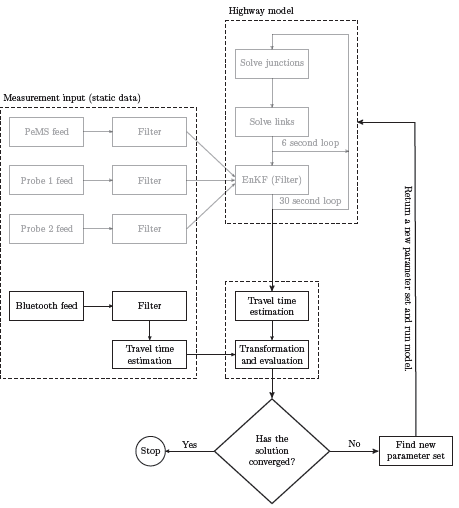
    • Freeway Traffic Estimation System - using a cell transmission model (CTM) for simulating the flow of vehicles on a freeway, and an ensemble Kalman filter (EnKF) to assimilate measurements GPS probes into the estimation model

Part 1. Calibration of Freeway Traffic Estimation System
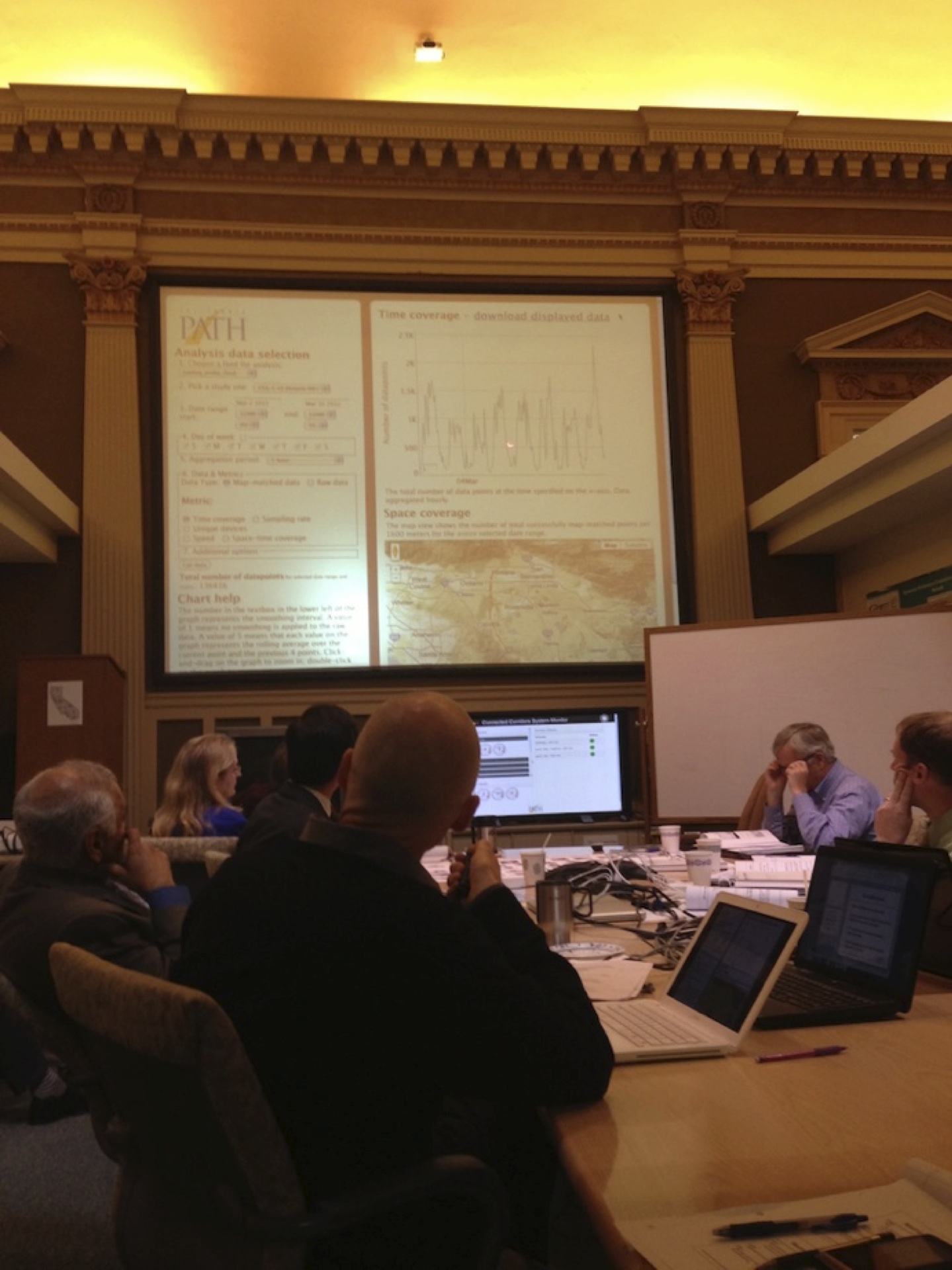
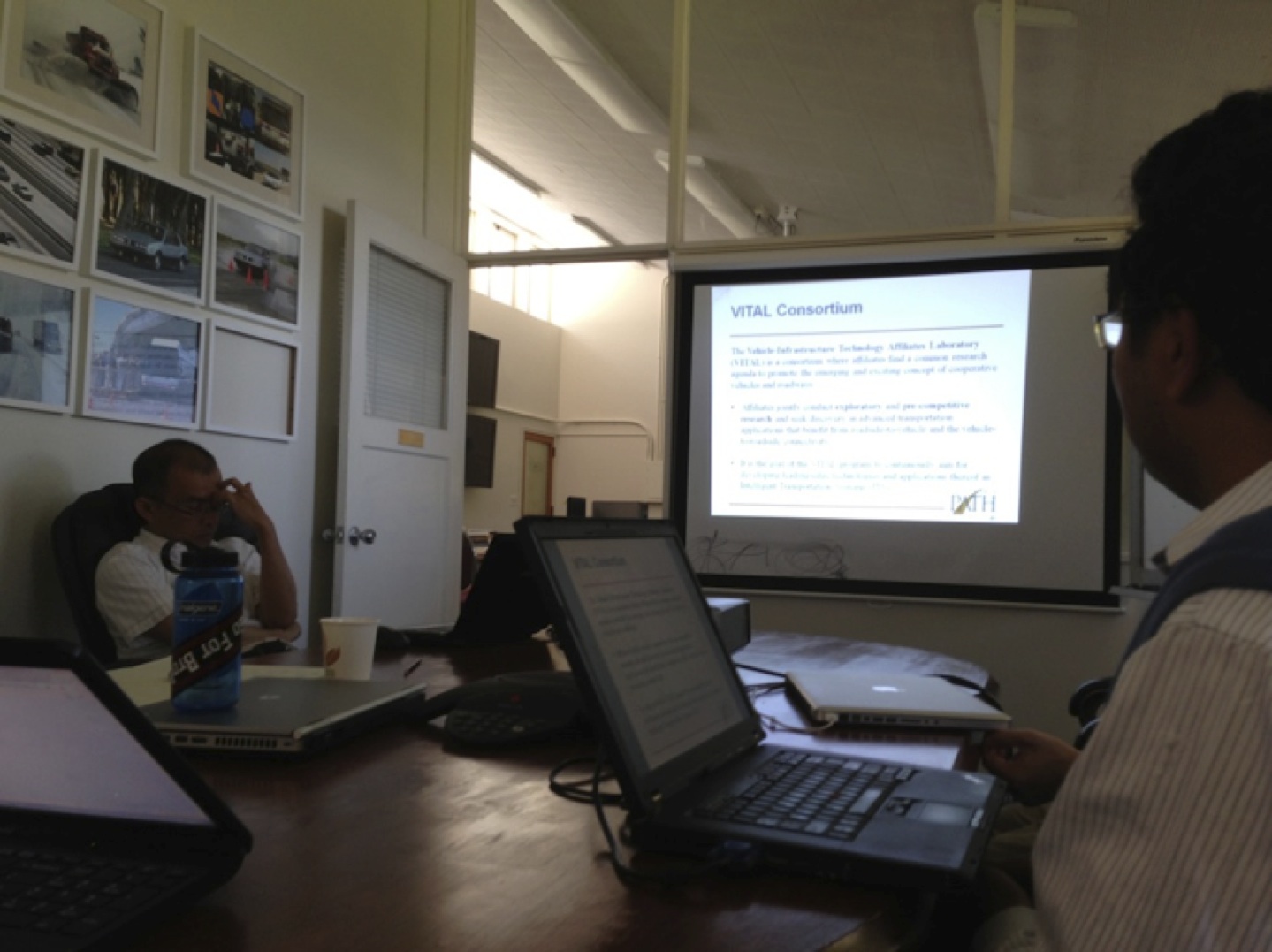
Part 1. PATH

Project demonstration for client - Caltrans

Part 2. Connected cars and self-driving cars

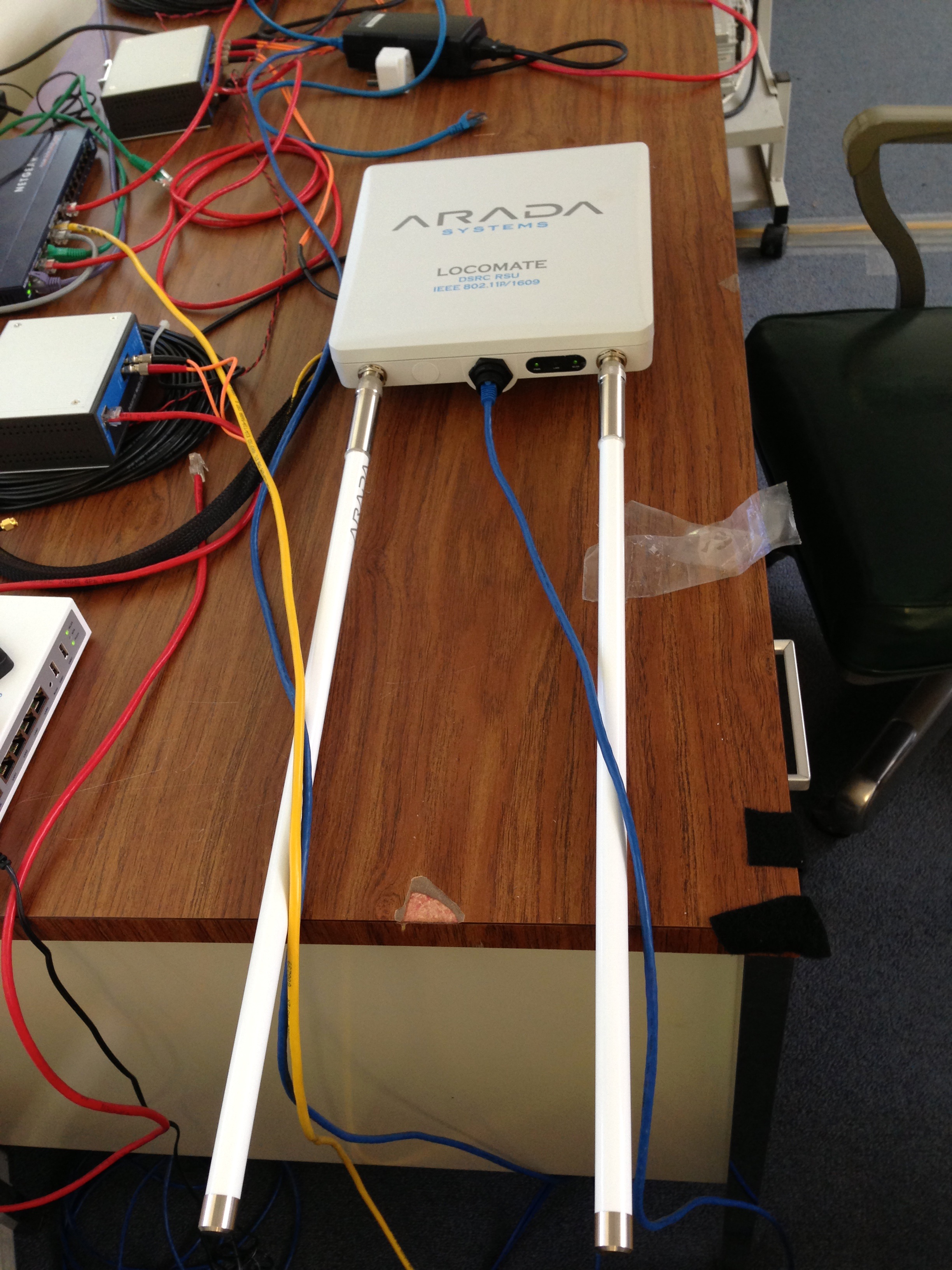
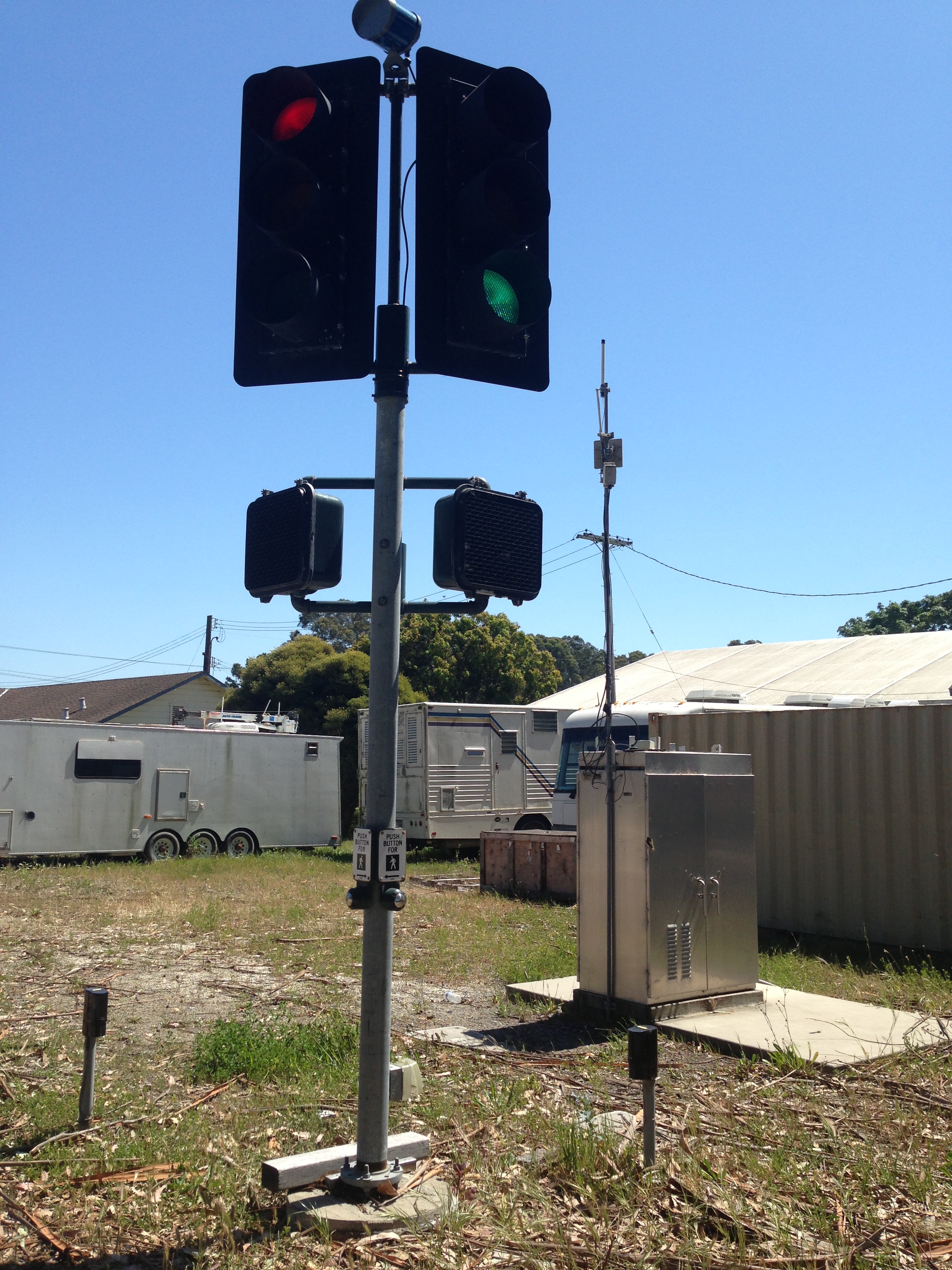
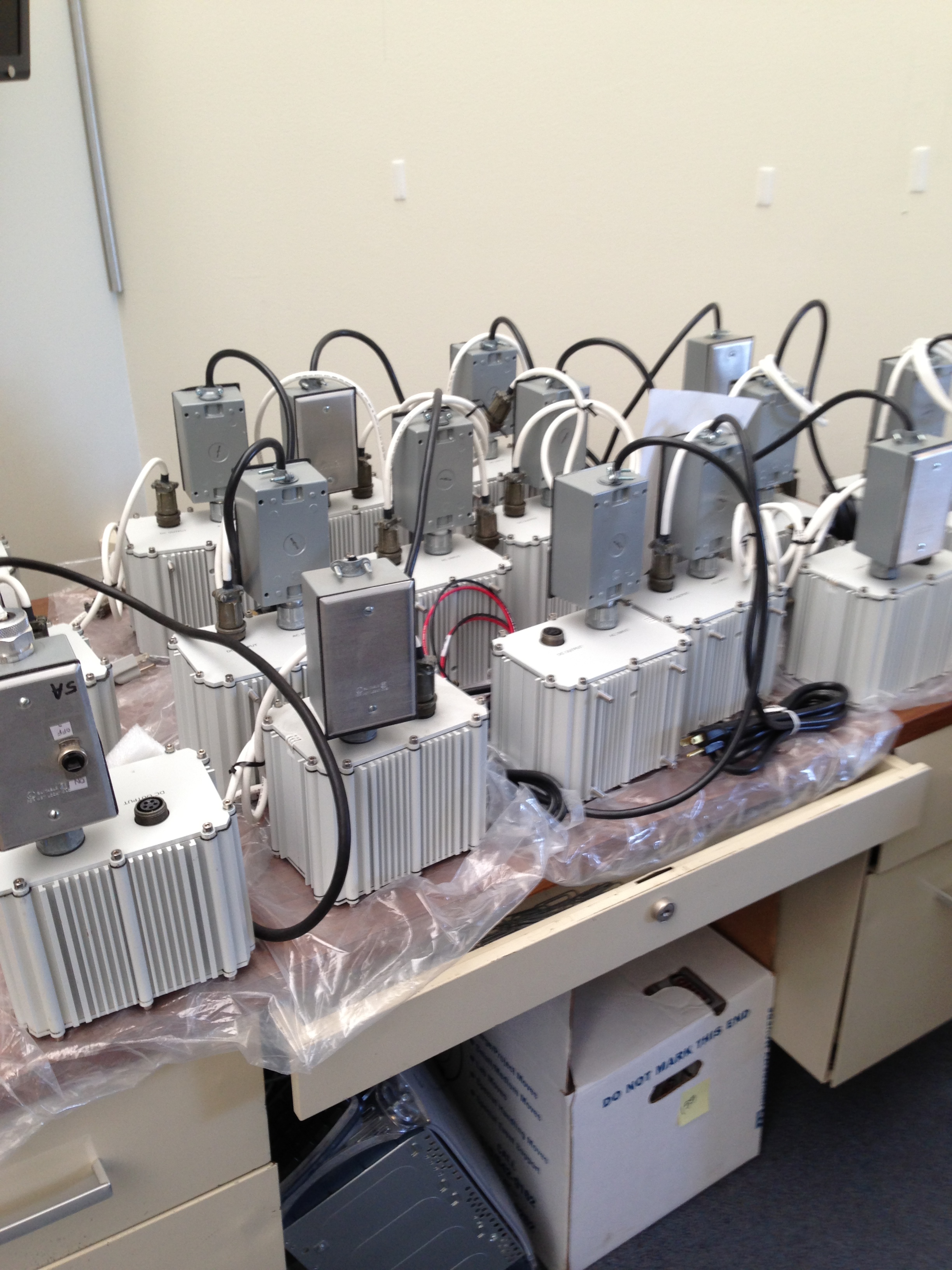
Part 2. Richmond Field Station

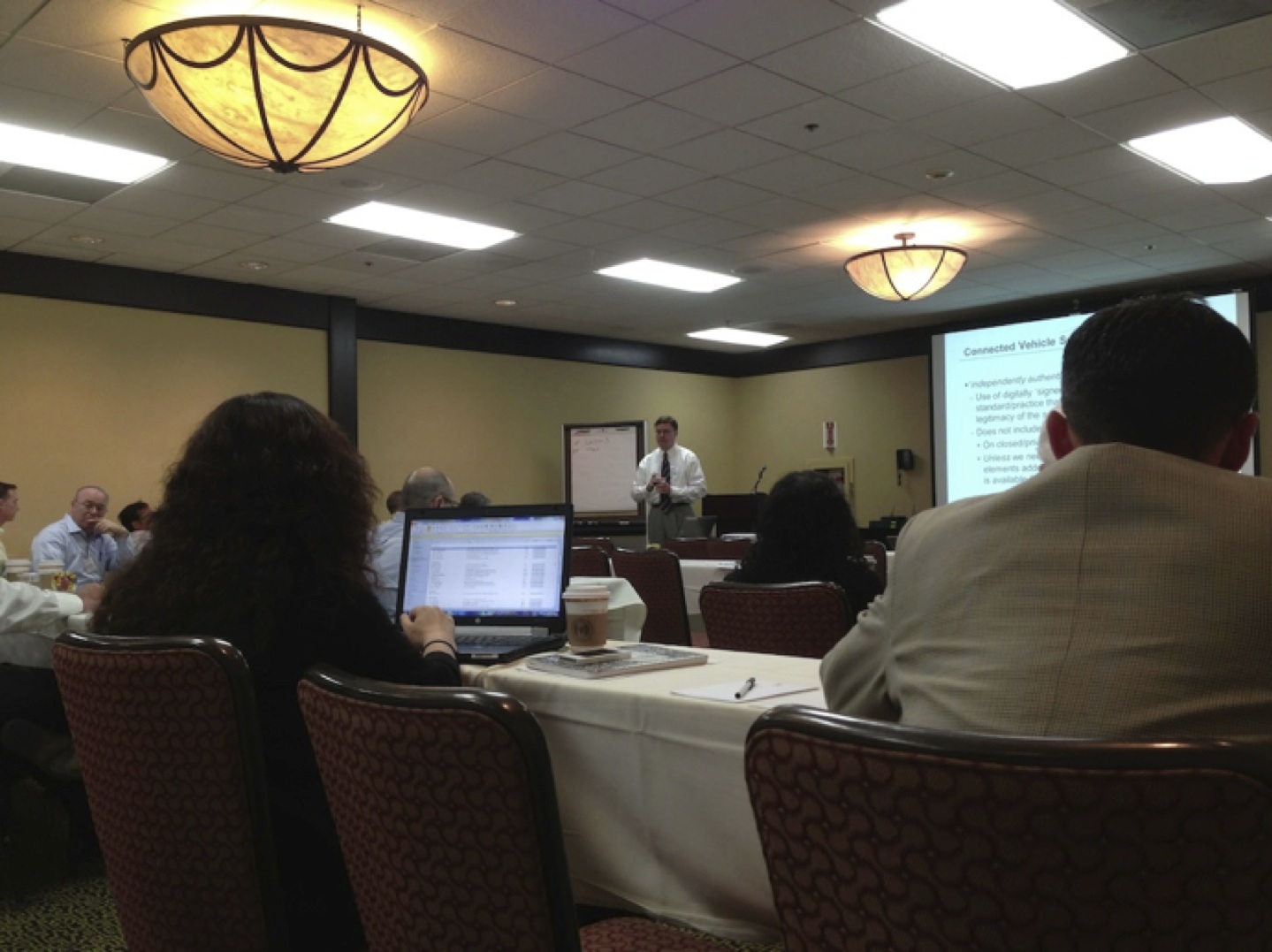
Part 2. CVRIA workshop (San Jose, CA, US, May, 2013)

Workshop on Connected Vehicle Reference Implementation Architecture program (CVRIA) organized by the Intelligent Transportation Systems Joint Programs Office (ITS JPO). Multiple vendors and implementers of connected vehicle environment (CVE) commented on standards for new technologies and applications
Part 3. Decision Support System

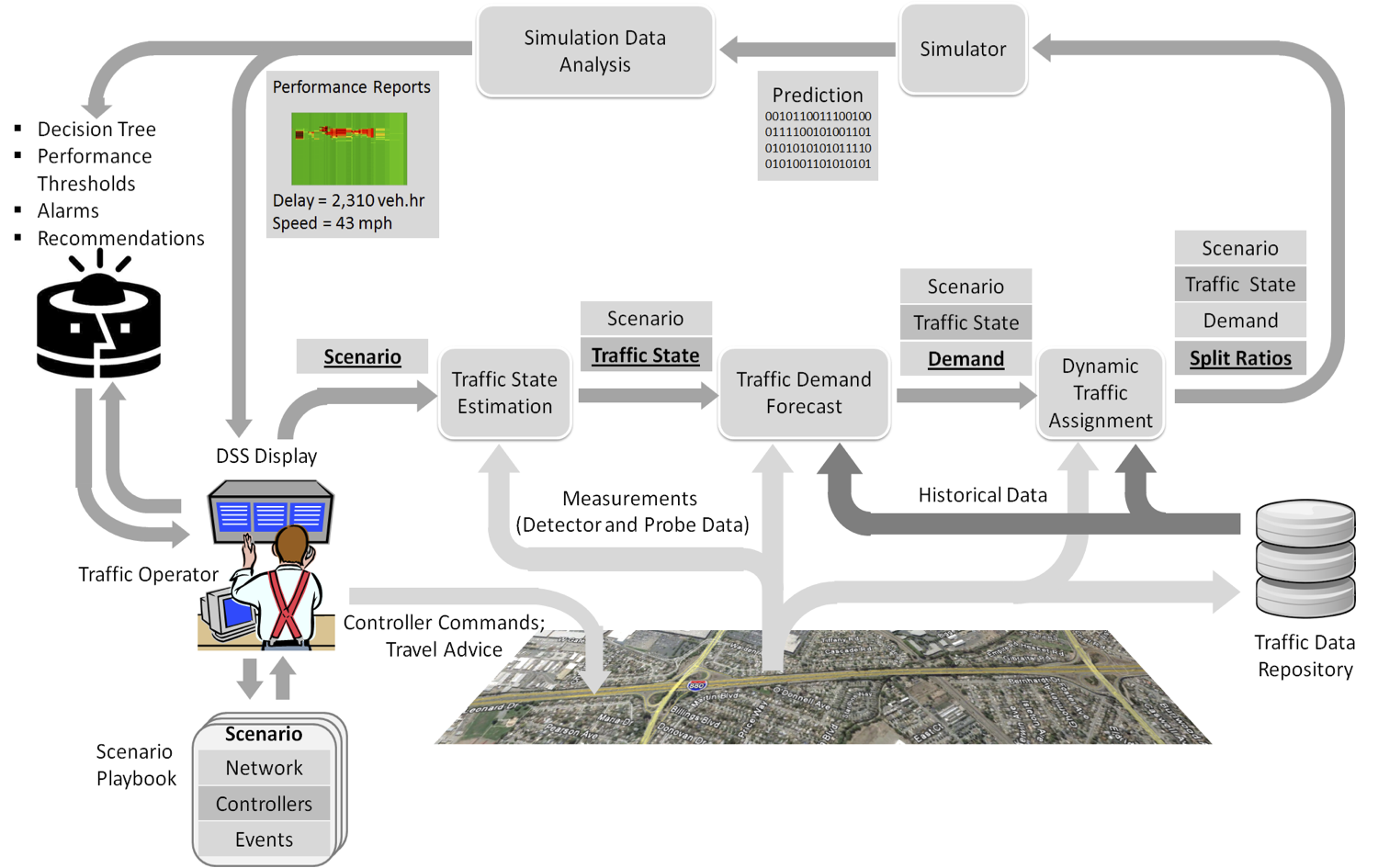
Traffic information and management system for California

  1. Monitoring of real-time traffic condition
  2. Estimation and prediction of traffic behavior
  3. Suggesting response strategies
  4. Evaluation of the response strategies with simulations
  5. Selection of the best response
  6. Input:
    • Traffic events (accident, road closure)
    • Weather conditions (rain expected)
    • Social events (games, holidays)
  7. Output:
    • Comparison of performance measures for different control strategies
    • Selection of the best control strategy

Part 3. Decision Support System

Other activities

Graphlab workhop, San Francisco, July 1st, 2013, 2013
Other activities

Connected Cars Aps (Uber, Ford, Telefonica) San Francisco, October 2 2013
Other activities

GraphConnect conference, October 3-4, 2013 , 2013
Other activities

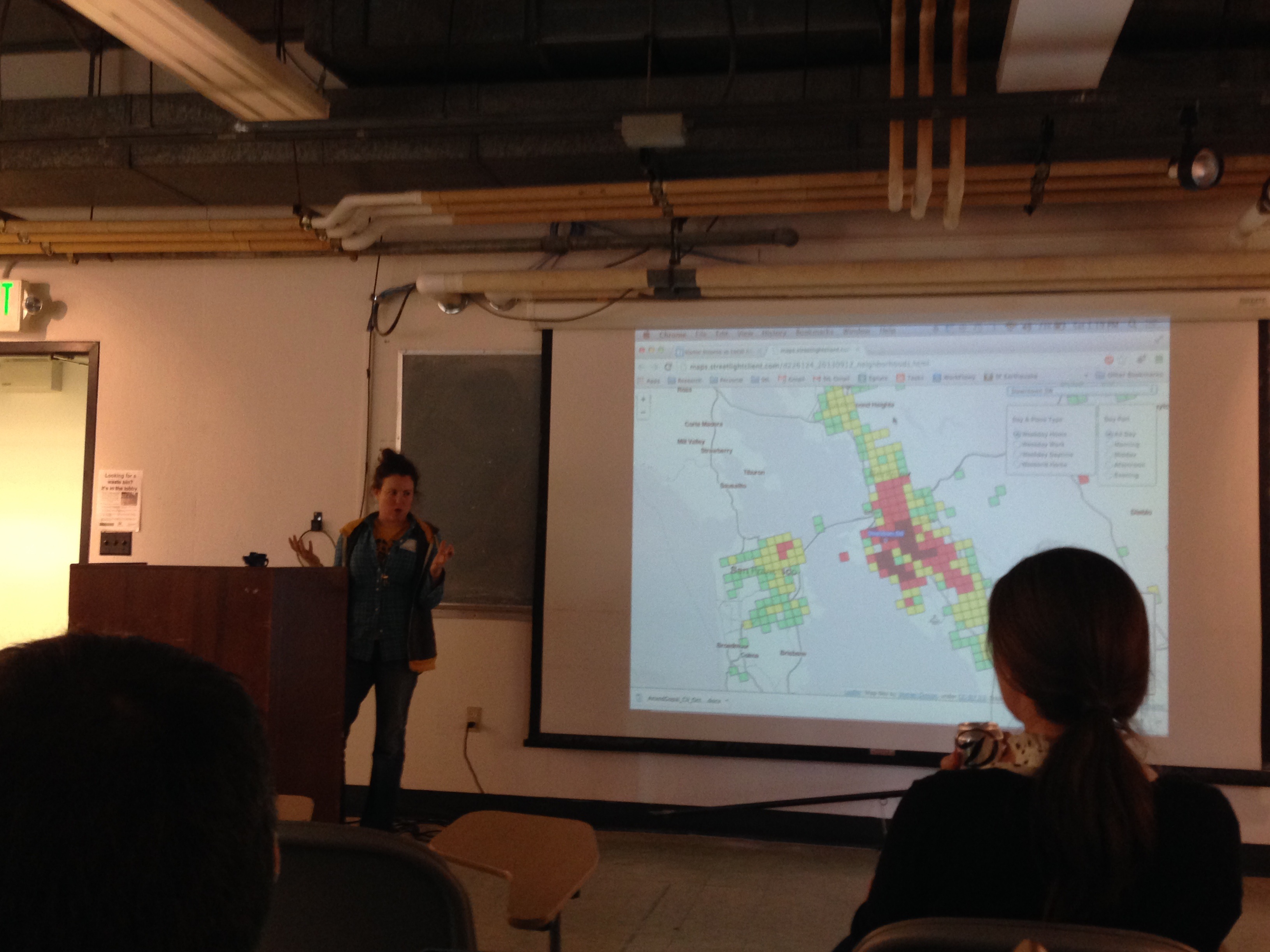
Transportation Conference, UC Berkeley November 16, 2013
Other activities

Transportation Conference, UC Berkeley November 16, 2013

Other activities

Part of a student group at UC Berkeley: VUD Lab


Lessons learned

  1. The big picture of the transportation:
    • Traffic information systems - online systems that gather data from different sources and show real-time traffic.
      • Previous systems using historical data were good for planning.
      • Today's systems aim in short time prediction about what will happen in half an hour. They only rely on real-time data and learn typical traffic patterns so and can't response to unpredicted traffic situations.
      • Future systems aim in using real-time data to control people - manage the demand: ride sharing, routing, prices. Currently demand management is done through economic means.
    • Connected and self-driving cars.
      • Starting of autonomous cars at PATH (Shladover)
      • Dharma Initiative
      • Google self-driven cars (2017)
  2. Practical knowledge about:
    • The structure of US universities and methodology in research.
    • Current Traffic Information and Management Systems in California and plans for the future development
    • Research trends in transportation.
  3. Conclusion:
    • There is a paradigm shift in transportation systems: from centralised to distributed (driver-centred).
  4. Ph.D. context:
    • Vehicular network can implement and improve distributed traffic information and management systems.


Ph.D. thesis

Title: "Community-based vehicular network for traffic information systems"

Premises:

  1. Vehicular networks can be used effectively in traffic information and management systems.
    • VANET-based traffic inormation systems efficiently distribute traffic data.
    • Problem solved: Estimation of traffic condition in urban areas (currently is hard due to lack of traffic data).
    • VANETs enable control over individual vehicles (e.g. routing).
    • Problem solved: Lack of control of drivers behavior.
  2. Distributed community detection enables better communication in the vehicular network.
    • Dynamic formation of communities groups vehicles who travel together and share communication for a longer time.
    • Problems solved:
      • Control of communities for demand management (routing, ride-sharing, fleet management).
      • Information from communities for traffic control (density estimation).
      • Communities can be used for analysis of patterns in traffic demand.

Outline of the thesis


Current work

Crowds - mobility-based distributed community detection algorithm


Crowds - results

vis.mushlab.com/single

Crowds - comparison

vis.mushlab.com/multiple

Gantt chart

Plan for the third year

End